

August 2022 | Volume 17 | Issue 8

Missions Pathways Can Begin in College
Help young adults choose majors with global-impact potential
A vast array of college majors confronts young adults, and many are overwhelmed by the options. Some of these students are interested in a future missional role, but they don’t see how their choice of college studies could be a strategic step in preparation. In decades past, church missions and youth leaders often urged young people toward a missions major, yet in recent years many schools have moved such studies to the graduate level. The other traditional routes—medicine, education, or business—only fit a portion of the potential missions work force.
Meanwhile, field workers are finding the global context more and more hostile to someone coming with the title of missionary and primarily religious studies on their resume. And once in-country, workers recognize, sometimes too late, the value of a professional background to “justify” their presence, contribute to the community in a tangible way, and/or find a means to establish meaningful relationships with those they want to reach.
All of these factors confirm that choosing an undergraduate major that matches the person’s passion to an area with high ministry potential can be an important early step toward service. To help them understand what that might look like, students need to be introduced to role models who are using such a background for ministry benefit.
What advice are you as a church leader or parent giving to young adults selecting career studies? Agencies will often say, “God can use any skill.” While that is true, the advice doesn’t offer guidance to college-bound youth who see no connection between their interests and such titles as “church planter” or “missionary.”
This issue of Postings features a number of field workers whose college studies prepared them to make a valuable contribution to a global or domestic ministry context that would also open doors for the gospel. At the end of these stories, we share some suggestions for how you as a pastor, church missions leader, or parent could speak into the college-major decision.
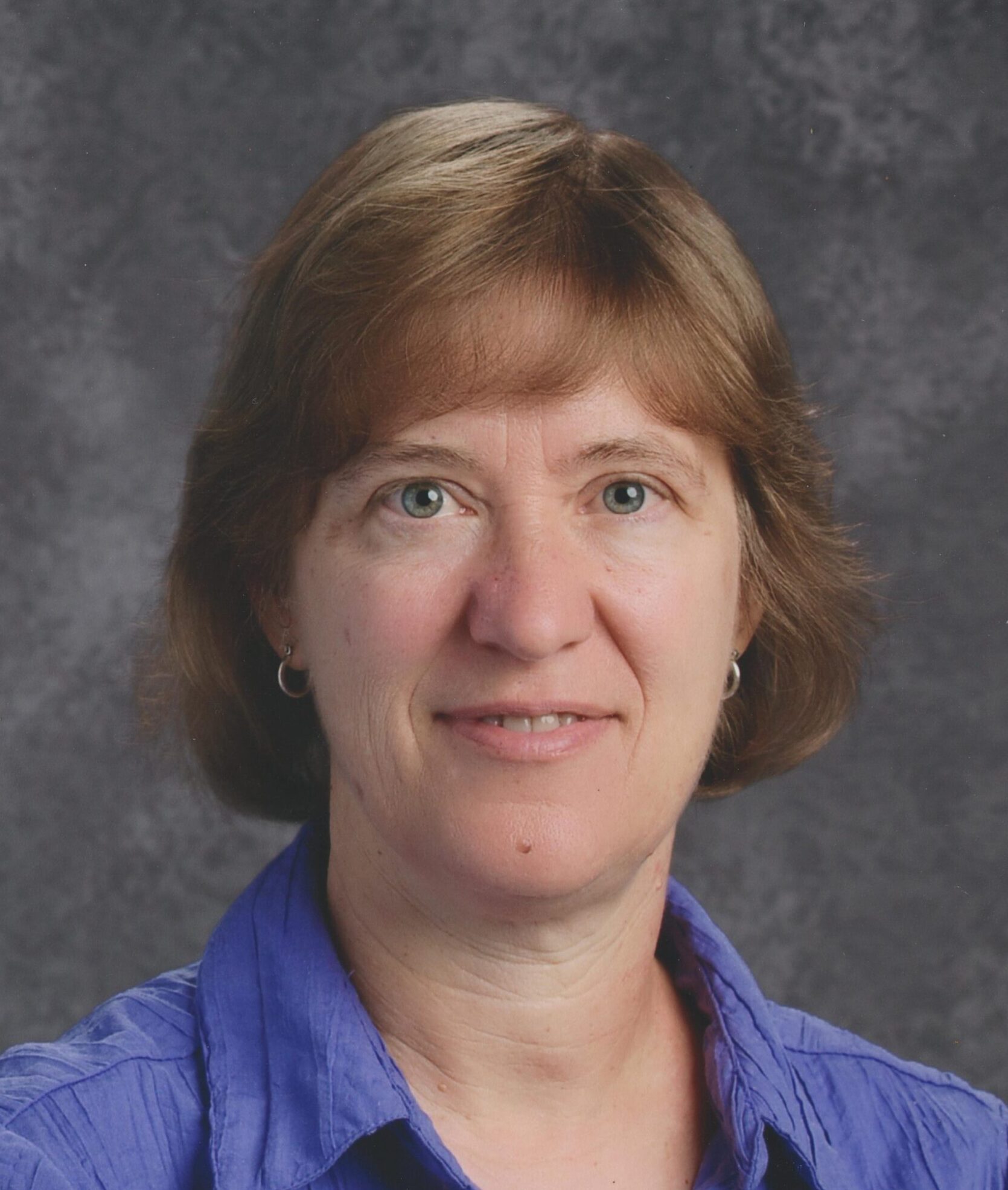
When I enrolled at Bethel College in Minnesota, I knew that I wanted to support families, perhaps those with special-needs children. And I had a tug toward missions. Halfway through my college years, I changed to a social work major and loved it! In my senior year, I started working with refugees and immigrants, and enjoyed this highly valuable cross-cultural experience.
A social work degree provides a broad background that is so practical. It includes some counseling courses, some foundational studies in how to set up services, basics in case management, skills in recruiting and training volunteers, background in how to establish school programs in things such as anger management, and training in advocacy and how to handle political asylum cases…the list just goes on. And it’s all useful in so many global and domestic contexts.
My training helped me to look at problem solving systemically, not just on an individual level, which is valuable in addressing community needs. Another aspect of my studies that served me well in missions was the emphasis on leadership skills. Social work and missions often require the ability to lead organizationally with wisdom and integrity.
Another practical emphasis in my social work studies was the focus on selfcare. Because burnout is a major threat to those who serve people, social work majors are taught to set up boundaries, find mentors, and pace themselves in order to last for the long haul. In missions today, we are increasingly aware of the importance of keeping global workers and missionary teams healthy spiritually, physically, and emotionally. Social work courses provide a great foundation.
I recommend that anyone interested in a ministry in social work earn their degree from an accredited school and then pursue licensure. Licensure gives you greater credibility. For example, I worked in a refugee camp in Thailand for two years, part of this time with the UNHCR mental-health program. My social work credentials opened doors because they earned me respect, not just with the refugees but also with professionals on the team. Had I just had a religious/pastoral background, I would have been pigeonholed into a more limited role.
When my family was serving in rural Mozambique with SIM, the people didn’t know what a social worker was, but I used my professional training all the time. As a church planter, my social work skills prepared me to do home visits, sit with my neighbors and listen carefully to their needs, and then determine ways to support them. Those relationships helped to build the church. During the time we were involved in flood relief, we worked closely with Samaritan’s Purse which understood and valued my professional skills.
When we moved to Kenya, our African church’s denomination was just starting to send missionaries, and they asked me to serve on their mission board to speak into providing member care. This was definitely in my wheelhouse as a social worker. What a privilege it was to help them serve their missionaries better!
Currently I’m a social worker in the rural heartland of America. My social work credentials opened the door for this position, but each day I see my job as ministry. For instance, the mother in front of me may have lost all her teeth to meth, yet she wants to parent well. My social work skills combined with my passion to serve Jesus enable me to know how to bring acceptance and mercy to her situation. Daily I can live out my faith as I serve some of the neediest in this community.
 I graduated from Houghton College with a double major in environmental biology and intercultural studies because I grew up overseas and love cultures, and I also love Jesus and God’s creation. Spending a college semester in Tanzania really helped me see how my two areas of study might intersect. But as I neared graduation, I still wondered how in the world I was going to put together my love and concern for wise stewardship of God’s creation with my love for people and bringing the gospel to them.
Once out of college, I completed several internships, one of which was teaching environmental education for K-12 students. That was quite a growing experience for me because I had no teaching experience. I recommend doing things that you’re not super comfortable with but that are in your area of specialty because you never know how God is going to use you. I also gained some great hands-on experience working for a large engineering firm and then with a Christian organization called ECHO.
Finding my spot in missions took time. When my wife and I first came to Brazil as missionaries, I taught missions and sustainable farming skills, while my wife, a nurse, taught health care—both of us in a school preparing Brazilian missionaries to serve overseas in rural areas. But I kept wrestling with the verses in Romans 8:18-22 and Colossians 1:18-21, which state that Christ has brought reconciliation to all of creation…since creation too suffered from our sin ever since the Garden of Eden, and I wondered what the Church was doing in response. One obvious answer seemed to be helping the poor solve their environmental problems, because more than any other segment of society they most directly depend on creation for their survival yet often have the majority of environmental issues. Just as any other section of society, they have the same need for the gospel.
Recently I began working here in Brazil with a global non-profit organization focused on reforestation work, so I’m using my skillset in the environmental field. I’m involved with reforestation because I believe that as Christ followers, we should be at the forefront of such efforts in obedience to the biblical mandate to care for creation. But I’m also a TEAM missionary, so wherever I travel to oversee planting projects or staff trainings, I’m looking for open doors to share the gospel and to disciple young believers that I meet on staff or in communities where we work.
As I think back on God’s pathway to my sweet spot of service, much depended on my willingness to try, to mess up, but then to try again. Along the way, I developed the skills in an area where I could see myself serving, and then waited on God to direct my steps.
I earned my bachelor’s degree from Taylor University, majoring in finance. After graduation, I worked in various accounting roles but eventually began sensing a call to missions. I definitely wanted to serve in a way that maximized my education and experience in finance.
I had friends working at Congo Initiative in the Democratic Republic of Congo (DRC) with United World Mission, and they needed someone with my qualifications. I came to serve as their vice president of finance and while there implemented a budgeting process and financial controls for the organization’s university, primary schools, and other programs.
I also consulted with Nuru, a Christian-led, solar, mini-grid company here in the DRC. Eventually I became Nuru’s full-time director of financial management, overseeing the financial and accounting functions and supporting investor relations. My vocational calling and my education have been a great match for this role. I’m excited to use my gifts, training, and experience to help expand the Kingdom of God.

I am currently a senior at Redeemer University in Hamilton, ON, combining physical education and youth ministries studies in order to pursue my passion of sports ministry. Via two internships, I have already had the opportunity to work extensively with Onside Athletics, a sports ministry of FEB International that partners with local churches to provide sports programs where youth hear the gospel. This perfectly blends my two fields of study!
For my first internship, I spent a summer as a site assistant director and camp counselor in the farm country of Elora, ON. In my second internship, I served at James North Baptist Church in downtown Hamilton. This church is also home to a Portuguese and a Karen refugee congregation. The ministry is very cross cultural! I had the privilege of overseeing 23 staff (including Portuguese and Karen volunteers) and coordinating the soccer league with over 200 children. My biblical and theological training was essential, but so was my physical education background. Sports is a fantastic bridge to reach people across languages, tribes, customs, nations, and cultures; it is a common meeting place where community happens.
I am currently on track to step into a full-time role with Onside Athletics once I graduate, and this opportunity is directly related to my university training. I believe that I’m not just called to be Christ in the Church, but also to practically live out the Great Commission to go and make disciples of all nations. We have the important and beautiful task of faithfully empathizing with the people and culture around us so that we can accurately share our greatest joy and plant seeds of our hope in their hearts.

I grew up in a home and church very involved in missions, but I didn’t see how I would fit. As I considered college options, I thought I needed to study something practical, so I chose elementary ed, but internally I was wrestling with God because I knew that He had made me a creative, an artist. Was He saying I shouldn’t pursue art? I didn’t see how I could use art to support myself or reach the nations.
Some friends challenged my thinking and suggested that I seek the Lord about how He might want to use my art. Over time, God destroyed the lies I was believing and gave me a confidence that He would use me as an artist. However, understanding how I could use art to be a light in a dark place didn’t come until much later.
By the time I needed to declare a major for my studies at Biola University, God was opening my eyes to the impact that art has on culture, and I was beginning to understand that He doesn’t haphazardly toss out abilities and skills. He has a definite plan and intends for our passions to be used for His Kingdom. The pieces were beginning to come together, and I chose to get my degree in studio art.
God had used the Perspectives course in my first year of college to open my eyes to the overarching theme of the Bible—that He desires to draw all nations to worship Him. Through the course, I also learned about unreached peoples. That’s when I surrendered my life to God to use me however He willed as He built His kingdom, but I knew He was going to have to show me how art and the unreached could fit together. The year before graduation, I attended the Urbana missions conference. I went to every booth asking, “I’m an artist, can you use me?” Everyone hemmed and hawed. Nobody gave me any encouragement that God could use me as an artist.
In his providence, God used that discouragement to press me to dream audacious dreams. “Lord, could I as an artist set up a studio among an unreached people and in the course of working out my vocation build relationships and help establish a church?” It seemed crazy, and it was 15 years before I ended up on the field. In the intervening time, God gave me the opportunity to become an established, professional artist. I learned how to create, exhibit, and sell my work, and how to start and run my first arts business. Eventually I committed to take a year and move to a location where I could serve an unreached people and test out whether my vocation as an artist made sense in that context.
Miraculously God provided coworkers with a similar vision, and today we have developed a creative arts business in this unreached context, which is opening so many doors for the gospel and the establishment of the church in this city. As part of the mission agency, Serge, we have also developed an internship program where art students can come and connect to our arts business and to our clients. Our interns are mentored as artists, learning to live out the gospel of grace in a cross-cultural, vocational context for Kingdom impact. We emphasize: Yes, your art does fit and there’s a wide-open door!
It’s hard to believe sometimes that I’m actually now living the life that was once just a far-fetched dream. Being an artist is very flexible and opens up so many doors and relationships. I can connect with many creatives here and spend time with people. Often when I’m on a visit, I pull out my sketchbook and start drawing. People gather, and we connect and begin relationships.
Where I serve, you can’t come as a missionary; you need some other vocation to live here. You need an identity that makes sense to people, an actual vocation that allows you to engage with and walk alongside others in the community. So if you’re an artist, please come!
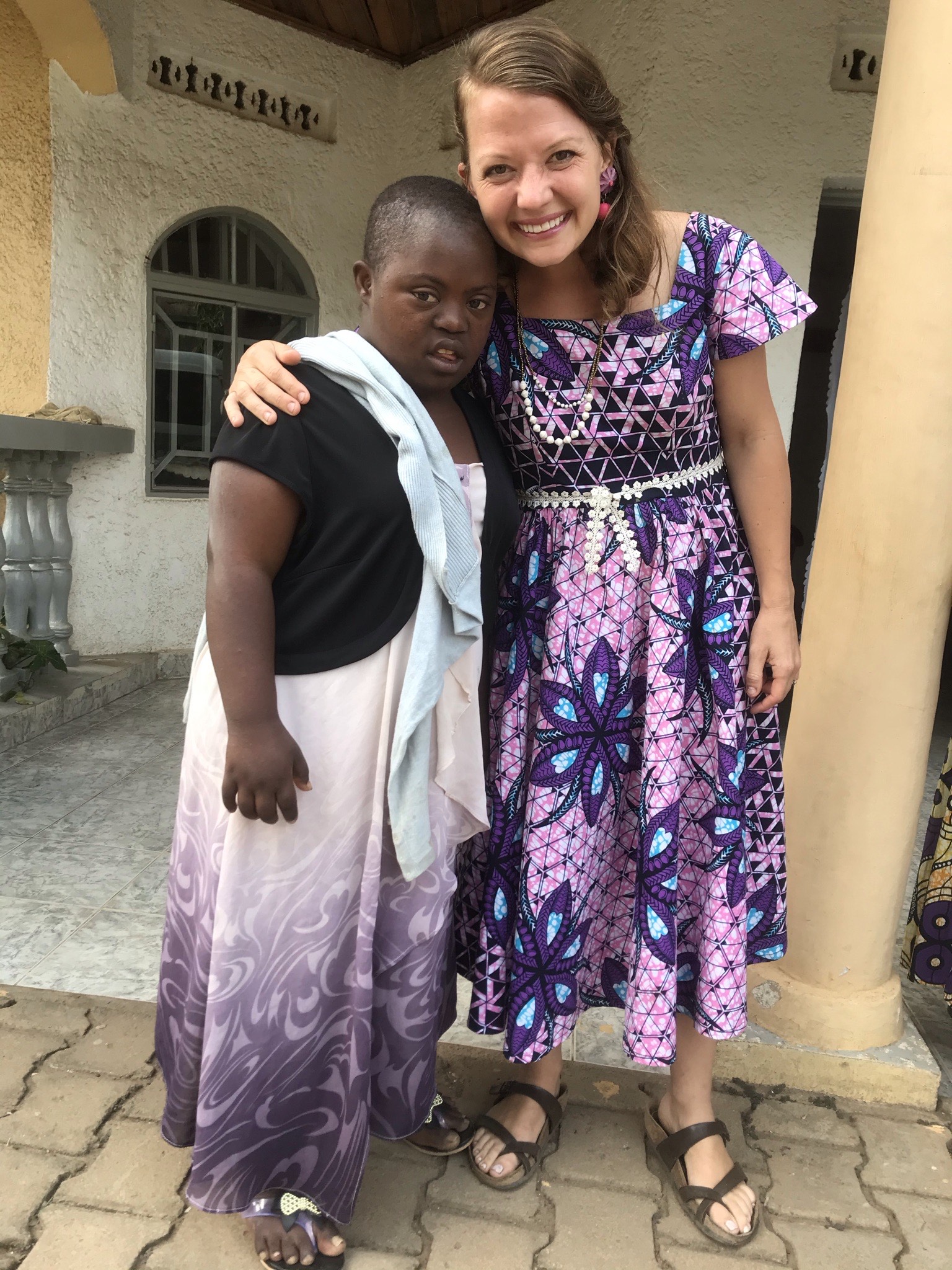 In high school, I knew I wanted to build my life around serving people, so when it came time to choose a college major, I selected psychology. But I soon realized psychology wasn’t going to give me the skillset that I needed. Through events including a mission trip to care for orphans in China and a job as a respite caregiver for a family affected by disability, God confirmed my calling to serve children with disabilities and their families in overseas missions. So I switched to a major in child development and loaded up my toolbelt with all the disability-related courses I could take.
Ten years later, I am serving with United World Mission in the conflict-ravaged Democratic Republic of Congo in a context where God is enabling me to serve far above my natural capacity. As the disabilities support specialist with a ministry called Congo Initiative, I serve alongside colleagues with backgrounds in trauma counseling, program management, and theology. But I am the only one with a background in child development and special needs. Because of this expertise, I have been privileged to kickstart the first program for families affected by disability in this city.
Through the years, I have been learning to listen to my national colleagues who may not be experts in disability ministry but are proficient in their culture. I also continue my professional development by reading, taking online classes, staying up to date with the international disability community, and connecting with partners back in my home country who are employed in special needs occupations and offer me their time and expertise (this is a great way that professionals at home can directly contribute to field ministry). I am learning to walk slowly and prayerfully into every situation, remembering that I just need to be faithful with the work I’ve been given to steward. Willingness, consistency, and love fill in the gaps better than anything else.

I went to a secular state university for college, and when I started, I didn’t yet know Jesus. I decided to double major in film studies and music with the dream of moving to Hollywood and working with film scores. God entered my life during my sophomore year, and though my priorities changed, I didn’t feel Him leading me to switch majors. Looking back, I can see how my studies were custom fit by God for something that at the time I didn’t know existed.
Eventually I became interested in missions and was very surprised to learn that I could use my majors on the field! Today I work with a media ministry making short films and uploading them to the internet to share the gospel with some of the least-reached people in the world. My knowledge of filmmaking and my focus on audio engineering and music were just the right fit for the team I’m a part of.
Our team creates digital images and animations, designs websites, creates logos, writes music, and much more. I now have a leadership role on my team and don’t use my filmmaking skills as much as I once did. However, for many years I had a hands-on role in all aspects of the filmmaking process from pre-production planning to directing and producing, running camera and audio on shoots, and then film and audio editing in post-production.
Think about this: if you are curious about Christianity but live in a country that isn’t very open to the gospel, where are you going to go with your questions? The internet! There is a need for missionaries with specific skills to meet these needs. My team, a part of the agency known as Avant, has college interns work with us every year, and they come with a wide range of majors like digital arts, graphic design, computer science, communications, and photography.
Now more than ever, ministries are utilizing digital storytelling and other media arts to evangelize and disciple via the internet. Your gifting and passion for communication can have a big impact! Study something that provides the skills to create media that can tell a compelling story. Research the opportunities to create stories that draw people to the gospel. There are many!
∗ Names withheld for security purposes
Speak into Students’ Choice of College Major
Have these stories given you an exciting insight into the way God is using so many different backgrounds and types of expertise to expand the impact of the gospel around the world? Here are some suggested next steps:
- Identify and pray. List the students in your congregation who are most likely to be in the process of choosing a college major. This usually includes high-school juniors through college sophomores. Challenge your pastoral staff and missions leadership team to pray for these young adults by name and ask God to guide them in the selection of their major.
- Interact with youth leaders. Sit down with your youth/student ministries director or anyone who leads programs for high-school or college students. Find out what they are doing to provide spiritual guidance for students choosing their college and major. Ask them to read this article and have a discussion about how you as a church could assist students in choosing a major that matches their God-given gifting and might be effective in global or local ministry.
- Engage with a guidance counselor. Is there a high-school guidance counselor in your church? Or is there one in your community you could talk to, especially someone sympathetic to your goal of guiding students toward God’s choice of ministry for them? Have a conversation about how they would suggest that you walk alongside students in these decisions. Could they help in this area as it relates to ministry-impacting choices?
- Survey your missionaries. Ask each of your global missionaries and those who work in local ministries whether they chose a college major that factors significantly into their current ministry. Could you conduct a video interview with those who have a story to tell similar to those we have chronicled in this article? How would they advise students choosing a major? Find out if there are specific skills in which college students could gain experience by serving for a short-term ministry or internship with them.
- Talk to parents. Parents obviously play a large role in their children’s college-studies decisions. Some of the parents in your church may resist any suggestion that they should encourage their children to consider missions as they choose a major. A discussion on this topic with a group of parents may not be easy, but it’s important. Your pastor and perhaps a representative from a mission organization or one of your missionaries could participate and share their perspective and personal story.
- Talk to students individually. Take time to have a personal discussion with your high-school or college students considering their future. It could be life changing! If appropriate, share one or more of these stories with them. Contact us if you would like to set up a personal conversation with any of these workers. They would love to encourage young people to consider using their gifts in a ministry setting. Make sure that the student understands that God wants to use them and their unique gifts regardless of whether He is guiding them toward a missions role on the other side of the globe or has a plan to use them through employment in their home town. Or it may be a mixture of both!
- Fund and encourage internships and career-specific, short-term trips. Do you have college students who should be challenged to consider some type of professional internship that could be done in a ministry context in your country or abroad? Should you be setting aside funds for such internships? How can you communicate internship possibilities to your upper-level college students?
As we collected the stories in this issue of Postings, we were struck by how eager each worker was to encourage young adults to understand that their gifts truly would be useful in the task of global Kingdom expansion. Many of them struggled for years, wondering if God had made a mistake and mismatched their passions/gifting with their desire to engage missionally. You personally have access to the next generation in your church whom God is preparing to fulfill His mandate. Will you encourage them to develop their unique gifts for His glory among the nations?