

March 2022 | Volume 17 | Issue 3 | by Doug Gamble

Break Out of Your Missions Silo
How one church made the Great Commission everyone’s job
by Doug Gamble, Crossroads Church, Raleigh, NC
Does the Great Commission belong to your whole church or just a select few members?
Congregations large or small often create silos when they divide up the task of making disciples in the body of Christ. They assign tasks to different departments like children, youth, worship, missions, outreach, etc., with each stewarding their own paid and volunteer staff, programming, budget, and facilities.
The decision to divide and conquer the huge task of cradle-to-grave discipleship ministry is not without justification. Size and scale may demand it; there is a place for specialization in the Kingdom of God. However, the challenge of a departmentalized culture is that many spiritual disciplines, including the Great Commission, can be willingly or unwittingly outsourced to one department as the exclusive place the discipline occurs.
In contrast, high-performing workplaces and sports contexts often employ the concept of cross-training which means that an employee or athlete has a primary position in which they play or serve, but leaders believe a certain set of skills and habits need to be learned and practiced by all. Such cross-training increases the capacity of each member as well as the overall team or organization.
Are churches failing at this core level of spiritual disciplines? Do we encourage people to cherry pick one or two disciplines that they are drawn to and then outsource other shared obligations to fellow members? While believers acknowledge that the Great Commission is clearly given to all who choose to follow Jesus, in siloed congregations, fulfilling that Commission can seem beyond the average believer’s reach.
There’s an unintended message that only the really missioned minded members will do it on behalf of everyone else. As a result, Great Commission potential is diminished.
However, we do not have to abandon our entire organizational structure just because a departmentalized culture shapes people’s minds and behavior to choose selective discipleship versus fully devoted discipleship. Instead, we need a new infusion of vision that uses departmental efforts to develop everyone in all the core disciplines.

“We need a new infusion of vision that uses departmental efforts to develop everyone in all the core disciplines.”
My fellowship is one case study of how to “un-silo.” When our current senior pastor assumed his role in late 2016, one of his early challenges was to help our departments break out of their siloed comfort zones. Our congregation was like a 30-year-old house that needed some major work in order to become more livable for a new generation. We needed updating to fit our current needs and opportunities. Participating in that effort has been painful and satisfying at the same time. I don’t know how it can be otherwise.
Here are some of the elements of the simple, yet challenging pathway that we took:
Admit we have a problem in our church organization and culture.
The senior pastor and our elder board needed skill, diplomacy, and lots of courage to kindly point out the unflattering realities of the church’s culture without a spirit of condemnation toward anyone.
Facing these issues was painful, especially for older members and staff who have been faithful stakeholders for two to three eras of the church’s history. As is often the case, our younger-generation leaders thought the need to change was very obvious. The older group had to work to not be defensive as these younger and newer voices asked honest questions based on what they saw in our church culture.
Ask the right questions to audit and evaluate assets, opportunities, and shortcomings.
The best questions were the shortest and usually hardest to answer. One simple but profound one: Why do we do _____ (naming a specific action)? Even leaders are likely to have long since forgotten why a church does what it does, so we needed to ask “why?” questions. Then we wrestled until God reinvigorated our “why’s” with His passion for making disciples and reaching the lost world.
One component we changed during our silo-busting journey was our core values. We previously had nine or ten. But when elders/pastors were asked in a meeting to write them down, to our embarrassment, not a single person could recall them accurately.
We now have four very short ones that we all can express clearly. Our values have grown in importance and are now articulated regularly because they describe what we truly value. This painful exercise affirmed what God was valuing in our midst. Now we use our values to cultivate our church culture in ways we never did with the old list.

“God was giving us a ‘reset opportunity’ to prune away ineffectual components and to dream how He wants to use us.”
Use the right tools to help everyone in our fellowship begin the journey to greater
collaboration.
We benefitted from helpful books, consultations, conferences, and trips to learn from better-designed congregations.
During this process we doubled the number of times our mission council met in order to devote the time necessary for deep evaluation of each component of our department. We added some new council members, younger folks already faithful to our fellowship but still new enough to have fresh eyes. These new perspectives made our difficult journey rewarding as we came to see that God was giving us a “reset opportunity” to prune away ineffectual components and to dream how He wants to use us in the next era of our church’s Great Commission life.
Do the math on the cost of change.
There are real costs to resetting from silos to collaboration and alignment. Here at Crossroads, we knew there would be a cost to change but an even higher cost if we didn’t. Each of our departments went through painful conversations, audits, pruning, and redesigning. It’s crucial to understand that part of the cost may be in the loss of leaders, members, and even staff. If goodbyes are necessary, make sure they are done with kindness and honor, and without blame.
However, our reset was not all pain. In my department, we uncovered a lot of great assets and accomplishments that had been previously underappreciated. The folks newer to our department became voices to tell our past, present, and future story, so all the church could celebrate.
Work toward church-wide ownership of all the spiritual disciplines.
More than three years into the process here at Crossroads, each leader owns their spot on the team, but it’s clear that the whole team is here to help each other.
Our senior pastor not only has many great ideas but also believes one of his core responsibilities is to be a cheerleader for the rest of the staff. Whatever we decide to do becomes a group effort with his full support.
Here are just a few illustrations of how Crossroad’s new integrated approach has reshaped our missions engagement.
1. Quarterly missions Sundays
With our senior pastor’s enthusiastic support, the missions department went from having just one to four mission Sundays per year. This is huge for us. Once the decision was made, our senior pastor challenged the team tasked with developing our Sunday worship services, “Doug has good content; he will come up with a theme. Ask him what he wants to achieve and make it happen. It’s up to you as the worship team to make the services wonderful!”
This approach tapped the best of all of our skills. I don’t know how to produce worship services; they do. But I do know great missions speakers to bring in; I can suggest videos or missionaries to include. We collaborate on these quarterly missions services with each of us doing what we do well.

“Each leader owns their spot on the team, but it’s clear that the whole team is here to help each other.”
2. Complementary messaging
Our church chooses an annual theme. One year it was reading through the Bible. Each week, our senior pastor preached on texts we were reading as a congregation. To build on that overall church focus on God’s Word, the missions department chose Bible translation as our missions theme that year. It naturally tied together what our whole church was committed to for those 12 months. As our people saw God use His Word in their lives, they were challenged to commit in various ways to supporting Bible translation around the world.
This year we are focusing on local missions as part of our churchwide vision to transform the Triangle and the world. Our missions department decided to choose 10 local ministry partners to feature throughout the year. We asked our tech team to shoot a video featuring the work of each partner, highlighting Crossroads members who volunteer with that ministry.
As part of this focus, our senior pastor challenged our staff to choose some aspect of local missions and “own” it this year. One way we are building that ownership is by arranging for every staff department to choose three of these featured local partners to visit sometime during the year. Our ministry partners are thrilled to have a group of Crossroads staff come to learn in person what they do. To make visits more fun for our staff, a free breakfast or lunch is included in each department outing, and the visits are scheduled during employees’ work time. Now when there is an opportunity to promote one of our local partners, instead of me being the spokesperson, a staff member who visited explains what excited them as they saw the ministry firsthand.
3. Serving others’ goals too
Our missions department has had to reengineer to serve all the others in ways we never imagined. Collaborative conversations have become the ongoing way of sharing the disciplines we all own for the Great Commission, worship, stewardship, and formation of character and heart.
Owning goals together means that the missions department serves other areas of the church too. For example, during Covid, our children’s department at times was short staffed. Once our missions department stepped in and took over the third-grade program. I don’t usually teach third graders, but because we are committed to the whole team, we served where needed.
After three years on this journey, I can honestly say that each department at Crossroads is truly vested in owning their part of the Great Commission. Our missions staff have become brokers for training, funding, and bridging to local and global opportunities. It’s exciting to be able to design mission opportunities for each department, building on their unique assets and challenges. We are amazed at our congregation’s growing generosity, and rejoice that more and more people are volunteering for local and global ministry. As a result, we are seeing that the Great Commission really is becoming every person’s job.

“Our missions staff have become brokers for training, funding, and bridging to local and global opportunities.”
Does the Great Commission belong to the whole church or just a select few? It can belong to all and should belong to all. Choosing to make our church cultures more like Jesus envisioned is a challenge for sure, but the rewards are joy unspeakable.
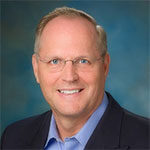
Doug Gamble is missions pastor and local missions outreach director at Crossroads Fellowship in Raleigh, NC. With 40+ years in local church ministry, the last 23 as a missions pastor, Doug loves all types of churches, and consults and coaches local pastors and lay leaders on a limited basis. He loves to discuss best-in-kind agencies and tools, as well as the intersection of local and global ministry. DougGamble@Crossroads.org