

February 2015 | Vol. 10 | Issue 2
Better Together?
The mutual benefit between churches and networks.
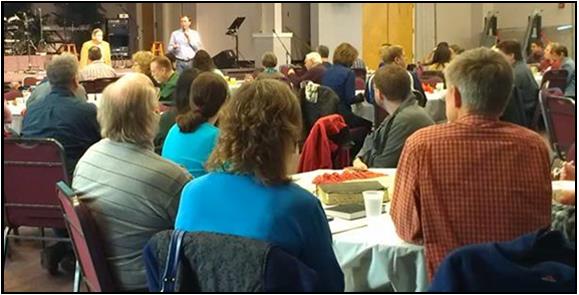
I had no idea what to expect the first time I walked into a missions network gathering. This particular network was based in the US and focused on reaching a major UPG (unreached people group) in Asia. Over the course of several days, I learned from many of the attendees who already had a deep commitment to seeing God reach this people. Some of them represented churches that had adopted this UPG. Others were past or present field workers. A few attendees represented mission agencies which worked with this people group. Then there were those of us who were just getting acquainted and trying to figure out if/where we fit.
We listened to reports. We prayed together. We talked about needs. We enjoyed amazing stories over meals. All of it was eye-opening. I left with mixed feelings. On the one hand my passion to see these people reached had grown exponentially. On the other hand, I was rather disappointed. I had a lot of unanswered questions like: What could a church like mine do? How did the various ministries fit together—or didn’t they? What was priority?
Since then, I’ve attended many other network meetings. I’ve discovered that networks come in many shapes and sizes. Some focus on a people group, others on a particular type of ministry or a country or region. Some are field-based networks that primarily connect workers on site. Others are more Western based, bringing together those who are committed primarily in support roles and funding.
Networks offer churches information, encouragement, and opportunities. Most congregations need those things. And churches can offer much to networks (more about that later). But effective relationships take work on both sides. To explore the possibilities, Postings interviewed several network leaders, consultants, and participants. This article is what they shared.
Consider this…
Church leaders: Most likely there are networks that serve the areas or peoples of the world where you are invested.
Network leaders: Most churches don’t know you exist or that they could make a valuable contribution.
Denominations/Mission agencies: Networks could substantially increase the strategic involvement of your churches.
Postings: How do networks serve larger Kingdom purposes?
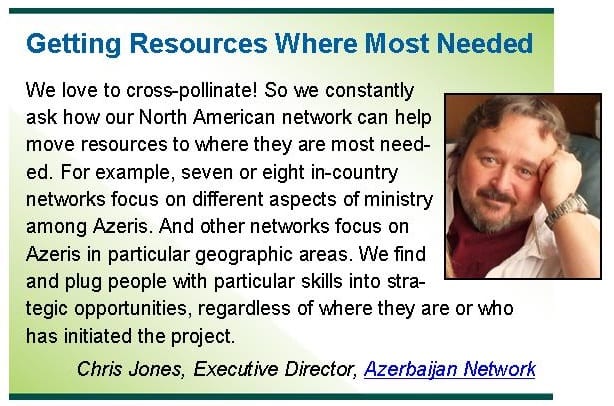
Chris Jones (North American Azerbaijan Network): Our network’s purpose is to mobilize the church in North America to reach the Azeri people worldwide. We focus on inspiring/informing, connecting, equipping, and accompanying people in ministry. The Azeris, like many peoples, are globally on the move today. One of the values of networks is that we can see the big picture and span borders. In our fluid world, it’s important to have a hub for connecting efforts going on around the world, in our case, among Azeris.
So we want to do everything we can to encourage local churches to participate. Our goal is to help them identify what resources are sitting in the church waiting to be used—skills that are critically needed! For example, we can use people with the expertise to set up a coffee shop, to run a printing business, to do graphic design. We’re looking for people in medicine, education, business, media. Professionals like these can use their abilities immediately because their skills are very transferable.
Wayne Small (coordinator of a network focused on SE Asia): We’re very similar. Our stateside network’s main purpose is to mobilize and equip local churches to be effectively engaged in starting church-planting movements in our geographical area of focus. Our goal is to see gospel impact in every UPG (unreached people group) there with a unique focus on unengaged UPGs. No organization can do it alone. Yet when we come together, God creates spontaneous combustion of spiritual movements.
We also have a field-side network. And there are specialized networks that function under our umbrella as well—networks for business as missions, sports outreach, media, etc. Some bring together primarily nationals and meet on the field; others meet in North America. One gathers annually in Finland. Our partnerships with South American churches and their networks are growing. It’s exciting to watch how one group discovers a solution to a problem that benefits another group. The synergy is amazing.
Kärin Primuth (visionSynergy): We work a lot with field-based networks. These groups primarily connect practitioners on a particular field or those who focus on a specific type of ministry. These networks become places where best practices are shared and collaborative efforts can be launched. These networks birth efforts that no one organization could tackle alone.
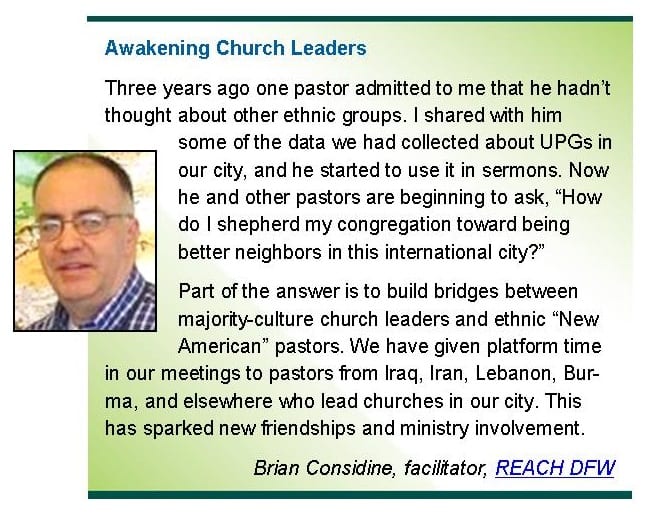
Brian Considine (Reach DFW—networking churches around the opportunity to reach the unreached people groups in the Dallas/Ft. Worth area): Another purpose of networks is to raise awareness in local churches here at home about their changing communities. We can help local churches think cross culturally in their own cities. We say to churches, “There is a mosque down the street from your church. What are you doing to engage your neighbors who are Muslims?” Often they are unaware it is even there.
Postings: So it sounds like networks have a significant missions role. Help us better understand how networks serve congregations in the West.
Renee Cook (a partnership facilitator at Cedar Springs Presbyterian Church): Churches want to invest in the most strategic battles, not waste time, resources, or money in meaningless skirmishes. Therefore, getting a wide and deep perspective on our area of ministry is crucial. To do so, our church tries to send at least two people each year to our network meeting for the Middle East. There are many benefits.
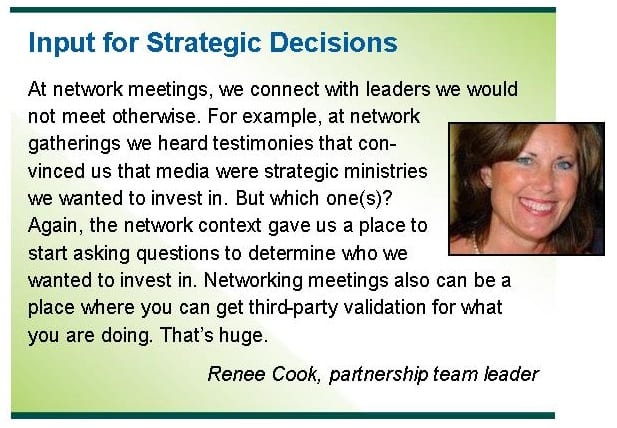
Primuth: At field-based network meetings, churches have immediate access to key on-site leaders and can get the field perspective. And there they can explore partnerships. In these settings, churches can sometimes even help to develop strategic plans for that field. One network comes to mind that is influencing the field strategies of hundreds of organizations. By participating in this type of network, churches can get up to speed so that their people are quite well informed and can step into fairly high-level strategic development.
Small: Networks also extend the longevity of a church’s involvement with an unreached people in a tough place. Historically, churches start off strong and excited, but often drift off if they aren’t involved with other churches doing the same thing.
Networks Serve Churches by Providing…
1. Access to key leaders and current information about a broad scope of highly strategic ministries
2. Ownership of a big vision
3. Coaching by experienced facilitators helping churches avoid mistakes and expand impact
4. Shared prayer requests and answers
5. Collaboration on projects too large for any one entity to accomplish
6. Encouragement to “stay the course” to see results
7. Opportunities to help shape strategy
8. The model of other committed churches
Jones: Another benefit is that a network can help a church focus on “the people,” not just “their people,” which is to say that they can own a bigger purpose. A network creates space where likeminded people can plan, collaborate, and cross-invest resources. All of this makes churches’ involvement so much more valuable.
Many networks provide access to a coach or mentor who can serve them. Churches may need information, or on the opposite end of the spectrum, they may be drowning in data and need someone to guide them through it. A coach/mentor can help churches avoid duplication or provide advice to help avoid engaging a poor approach.
On a very tangible level, networks can help churches avoid costly mistakes. One church leader told me, “We saved $10,000 in six months by connecting to you!” On the positive side, we can help churches collaborate in order to complete highly strategic major financial projects like Bible translation or publishing. We can do together what none of us could do alone.
Another way we serve is by being a conduit for prayer requests. Real-time needs of not only expat workers but our national brothers and sisters are shared. Intercessors from different churches connect and encourage one another.
Postings: Do you have suggestions as to how churches and their missions leaders can maximize the benefits of involvement with a network?
Considine: Networks can help your church think cross-culturally. Our network wants to raise the bar for churches on “Who is my neighbor?” and then, “What would we need to begin to do to reach these new neighbors?” We help church leaders find practical places to start. For instance, we set up a plan for churches to adopt a local mosque for prayer. It’s a great first step. Another starting place is training. We connect churches to resources and sponsor training events.
Churches’ Participation Is Successful When They…
1. Come as learners
2. Listen with discernment
3. Tap into the available expertise
4. Invest in relationships
5. Make a long-term commitment
Cook: In the network context, churches can listen to multiple voices. But it is essential to employ active listening. Don’t take everything you hear at face value. Ask penetrating questions like, “Is this just a heart-tugging report, or is the presenter’s ministry doing something significant and unique? Did they share the exact same stories last year? Are they solving a problem that no one else is addressing? Do they have passion and urgency?”
Jones: Many networks have a facilitator who is ready to assist churches. Take advantage of this resource—come and be coached! Facilitators are also resource people. For instance, over the years, our churches have taken advantage of the fact that they can text or call me at any hour if they have a question or crisis. They tap into my understanding of the field situation in order to make better decisions. I’m here to serve them.
Small: Relationships are essential to effective networking. And trust is the core. When you bring together multiple agencies, churches, and disciplines, people can build trust in each other. It takes an investment of energy over a period of time to develop that trust, but it is essential.
Postings: On the flip side of the coin, can you describe some ways that churches can contribute to the effectiveness of networks?
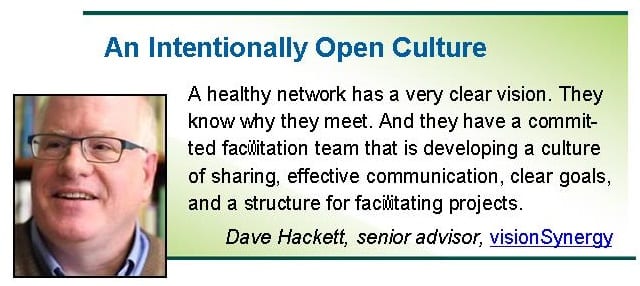
Dave Hackett (visionSynergy): It begins with loving and listening. Come as learners. Come to serve. VisionSynergy encourages churches to consider adopting a network. If they commit to a network just like they commit to a people group or other initiative, they can make a great contribution.
Primuth: Prayer support is a major contribution churches can bring. That’s essential.
Also, churches can provide logistical support. Field workers have other full-time roles, yet networks need infrastructure. They need administration, tech support, event planning, communication, research, etc.
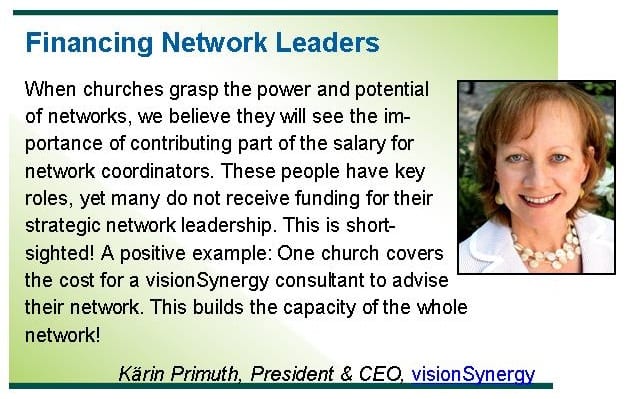
Jones: We need churches to join our network with a mindset that there is no quick fix. The Azerbaijan Network focus on a people group who have remained largely unreached for 2,000 years. If reaching them was easy, it would have happened a long time ago. Church partners contribute when they bring a long-term mentality.
There are other practical services: The vast majority of our project funding has come from churches. Local congregations also provide valuable resources and connections for workers coming home from the field. One of our partner congregations provides free office space for me—a very substantial way they serve our network.
Small: Churches also can strengthen other churches in their network. For example, one church leader came to IMPACT 15 years ago and learned a lot from churches who were already involved. Not only did his church choose to engage a people group, since then they have recruited seven other churches to join them in outreach to this UPG.
Postings: How would a church go about determining if involvement in a particular network is valuable for their partners and themselves?
Hackett: We would recommend visiting a network consultation as a great way to explore the possibilities. Some networks are high security, so you may need to go through some approvals before you are invited.
Do some due diligence to find out who the key players are and what the history of the network is. What are the challenges they are attempting to address?
Cook: Ask for help. At one network gathering, we met folks from a church who had no one to introduce them or guide them. Because they didn’t know how to connect, they were not having a good experience. We were able to give them guidance and provide some introductions. That kind of help is crucial.
Now we try to keep on the lookout for first-timers who need this kind of help. When we attend our annual network meeting this year, we will take with us a new missions director from another church. He will shadow us and benefit from the relationships we have established over the years.
Jones: Sometimes smaller churches don’t feel they have as much to give. Or they assume that participating in a network will cost a lot of money. But small churches can make a difference. For example, one person from a local church can connect via the internet and fill a major need. Over the years, some of our small churches have sent more long-term workers than our larger church partners have. So size is not a limitation.
Postings: What are the marks of a healthy network?
Small: Networks all ebb and flow. Healthy ones meet on a somewhat regular basis, and they have some type of communication vehicle where they can connect. A strongly committed point person is essential.
Primuth: A level playing field is tremendously important for networks. It’s not just for big agencies, or the highest-level leaders, or the wealthiest donors. The most effective networks work at developing a culture of exchange and learning among all partners. Missions knowledge is no longer exclusively in the hands of professional missionaries. Today leaders from all walks of life and from all parts of the globe bring high value. So healthy networks welcome committed champions from many different entities.
Cook: Churches are eager to engage their resources: We have prayer warriors. We have people trained in Bible and doctrine. We are motivated to give to missions. We have skills you need. Sharing the task is the key to success. Isolated ministry is a greater target for Satan. We need to do it together!
First Steps You Can Take Might Be…
For churches:
1. Visit a network meeting.
2. Get to know the network facilitator and leadership team.
3. Start at whatever level of involvement you can—but just start!
For network leaders:
1. Make sure your website and written materials clearly spell out how you serve churches.
2. Outline multiple ways churches can serve you. Ask for their help.
3. Pair churches attending your meetings for the first time with more experienced partners.
For mission agency leaders:
1. When you commission new workers, challenge their sending church to join a network.
2. Feature a network—or several—on your website or in publications.
3. Make active involvement in networks a priority for your church mobilizers.
Additional resources
- The visionSynergy resource library