

January 2017 | Vol. 12 | Issue 1

Successfully Riding Change
How global waves are reshaping church missions.
Postings asked missions pastors what global changes they believe will most impact global outreach in 2017 and how their missions program will need to adapt. Here is how they anticipate riding the waves of change.
From the political scene, to driverless cars, to the apps on our phone, change is bombarding us. In the church, sometimes waves of change seem to be propelling us to go faster. At other times they feel like they are about to crash on our heads.
In Matthew 25, Jesus tells the parable of the master who entrusted his wealth to his servants, then holds them accountable on his return. The inescapable truth is that our Master expects us to be shrewd managers of what He entrusts to us regardless of circumstances. Like those servants, we will face an accounting. If you are a church leader, someday you will answer for how you managed the amazing (yes, amazing) resources God has invested in your local church. Responding quickly to changing contexts and implementing change well are essential aspects of 10-talent stewardship.
Here are five perspectives on global changes and how these missions pastors are planning for change.
Global Task Force
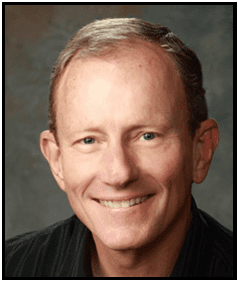 David Hall, pastor of outreach ministries, Emmanuel Faith Community Church of Escondido, CA
New 2017 Realities: Our local church was birthed and its missionary calling articulated at a time when the large majority of evangelical believers lived in the “West” or the “Global North.” Today the global church is increasingly non-Western and from the Global South, so we need to rethink the “we” who are actually going to finish the task of making disciples among all peoples. We must learn new patterns for collaborating with Asians, Africans, and Latin Americans. Americans increasingly need to be invited by, and follow the lead of, a church that is much closer to the point of need than are we.
Meanwhile, geopolitics and ideological conflicts have made the task of disciple-making among least reached peoples increasingly challenging. We need a more refined and nuanced strategy to effectively place long-term, cross-cultural workers who will be fruitful in Kingdom work and sustainable long term. Increasingly, experienced and professionally gifted people are needed, not the generalist missionary of the past.
2017 Change in Missions Program: We need to find people with gifts for disciple-making and training in the marketplace and community, not just inside church ministries. They will need to have professional degrees typically not found in Bible colleges and seminaries, and practical experience. We also need to develop better skills in Kingdom collaboration, sending people who know how to work on multi-cultural teams and in support of non-Western movements. All of this will require growth in our local-church practice since we currently do not embody those traits well here at home.
Flexible Resources
 Tom Keppeler, pastor of strategic partnerships, Elmbrook Church, Milwaukee, WI
New 2017 Realities: We want to be able to respond to challenges such as the Middle East refugee crisis, the growth of religious extremism, and the rising number of immigrants and refugees who are coming to our city. We want to be able to invest in initiatives that are strategically engaging these changing realities.
2017 Change in Missions Program: We must grapple with how to reinvent a nimble, discerning and contextually-aware missional engagement for our church. Seventy to eighty percent of our mission budget is spent on support of missionaries/field workers. As a result, we do not have the capacity to be nimble and responsive.
We must redefine and recalibrate what healthy “sending” looks like. We must redefine and recalibrate what healthy and strategic global engagement looks like. We must redefine what it means to “partner well.” These three things must operate under a healthy and clear articulation of missional priorities that also help us to know and discern what we will not do!
Refugees
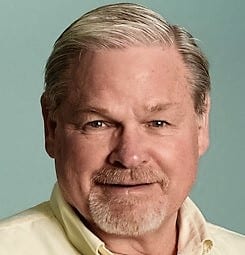 Herb Janes, director of global ministries, New Hope Church, New Hope, MN
New 2017 Realities: The massive, global scale of refugees and displaced people has the potential for both opportunity and distraction. The door is wider open than ever to minister to, and consequently reach, highly restricted people groups in particular. A related phenomenon is the way God is raising key national movement leaders. This presents partnership opportunities to scale up the impact. A key challenge is to avoid becoming solely a humanitarian effort.
2017 Change in Missions Program: We will continue to be a sending church while developing partnerships that mobilize and resource national movement leaders. We will wrestle with the shift in global funding to effectively respond. Investing in relational capital with national leaders is essential to discern that partners are rightly motivated and focused. For us, it is both a global and local opportunity. We need to educate our congregation on the unique outreach and security aspects.
Urbanization and Worker Diversity
Nathan Garth, pastor of international missions, Sojourn Church, Louisville, KY
New 2017 Reality: The forces of globalization and urbanization mean that unreached people groups are moving to cities in vast numbers that must impact the way we send and engage. At the same time, our church here in Louisville is rapidly becoming a multi-ethnic and multicultural church.
2017 Change in Missions Program: Our church has decided to focus our strategy on urban centers. Our vision is to send 12 church-based teams to multiply disciples and churches in 12 international cities. We want to identify and work alongside a local church in each context, not just connecting with, but coming under the strategic authority of a local church(es). For us, the way we avoid some of the pitfalls of the past when it comes to Westerners’ engagement in missions is by valuing the local church wherever it’s found. This has to play into our strategy.
Secondly, we desperately want our sending of cross-cultural workers to reflect the makeup of our congregation. This means that we need to intentionally send people from different ethnicities and cultural backgrounds. For us to do this well, we must develop strategies that will help us identify, assess, develop, and send future missionaries from all types of ethnic, economic, and cultural backgrounds.
Diversity and Global Church
RB, director of global outreach, North Park Community Church, London, ON
New 2017 Reality: We are daily being confronted with the reality that the world is on our doorstep, and that globalization necessitates change on our part. We have paid lip service to the change, and now we need to get serious. Our church is within a mile of a neighborhood of 20,000 people representing a vast number of ethnic groups. That neighborhood is growing and expanding and forming into an important new Canadian cultural identity, and all of this at a time when the Church in Canada is shrinking.
The Global Church on the other hand is thriving and growing disciples faster than we are, and those disciples show leadership potential that in many cases is far beyond that of the people we have been sending. Therefore, we need to send those who have the skills to equip global leaders; the day for sending “foot soldiers” from North America has long past.
In some parts of the world, North Americans are welcomed, and in others we are disdained. Being alert to the context allows us to know when we ought to go ourselves and when we ought to be primarily focused on inspiring and mobilizing others who are nearer and more appropriate for the context.
2017 Change in Missions Program: We will be reviewing whether our local outreach reflects a genuine effort on our part to be “living on mission” effectively and sacrificially in our own backyard. We have an uneasy sense that our efforts globally have led us to atrophy in our local work. While our financial giving has been strong, it may actually reflect that we have had “more money than mission.”
We are also on a long journey towards reshaping/reducing our traditional missionary force, and we will push farther in that direction. We will be shifting more efforts into building relationships with Global Church leaders and in focusing in a few contexts where those relationships have the potential to be vibrant over the long term. We have to learn how to attract and mobilize our marketplace leaders into these new global relationships, helping them to offer their vocation as a sacred setting for transformation to happen.
One hope we have is to increase our sending of young adults out into the world in order to expand their worldview. Rather than sending them as budding missionary foot soldiers though, we want to send them as learners seeking to build friendship and to be developed by our Global Church brothers and sisters.
How is your church proactive about change?
How many of the changes described in this Postings are, or should, be waves that propel your missions program in some different directions? Don’t try to tackle everything at once. Select one of the questions or projects below as a practical starting point.
- What are the “sacred cows” in your missions program? Besides biblical mandates, are there activities or strategies that you treat as untouchable or unchangeable? Discuss why you might want to let them go if other approaches better fit today’s opportunities.
- Commit as a missions team to read Paul Borthwick’s Western Christians in Global Mission. Set aside time to discuss the dramatic changes he describes. Consider scheduling a weekend retreat together to probe the book’s implications for your church missions program.
- Invite a Majority-World church/missions leader to come and speak at your church and to meet with your missions team. Ask what missions looks like from their perspective. What recommendations would they have for your church for sending new missionaries?
- The next time a member of your missions team goes overseas, ask them to spend more time with national believers than with missionaries. Be an observer of missions from the local perspective.
- Take your missions team through this exercise: Assume that your church has absolutely no prior missions-funding commitments for the coming year. What priorities would you include in your budget? Why? How could it best reflect some of the changing opportunities? Compare this hypothetical budget to your current one. What are the implications?
- Introduce your missions team to the Linking Global Voices map. Click on some of the links to read the stories of networks you have probably never heard of before. Networking is a relatively new way to respond to changing global contexts. Research further a network focused on a people group or ministry important to you. For example, if refugees are a concern, investigate the Refugee Highway.
- Ask the pastor of a local ethnic congregation, preferably a congregation made up largely of immigrants, if you can come and meet with them to learn about their vision and ministry. Listen to their personal story and learn about the challenges their congregation faces. How could you develop relationships that are not financially focused?